

How to change a behavior in 30 minutes

Date:
October 18, 2026
How to change a behavior in 30 minutes
and never encounter “you just picked a bad call” again
Here’s a situation you’re probably familiar with. You get into a 1-1 with an advisor, play a call you’ve prepared, and start explaining something they could do differently. A few minutes in, they say:
“You just picked a bad call.”
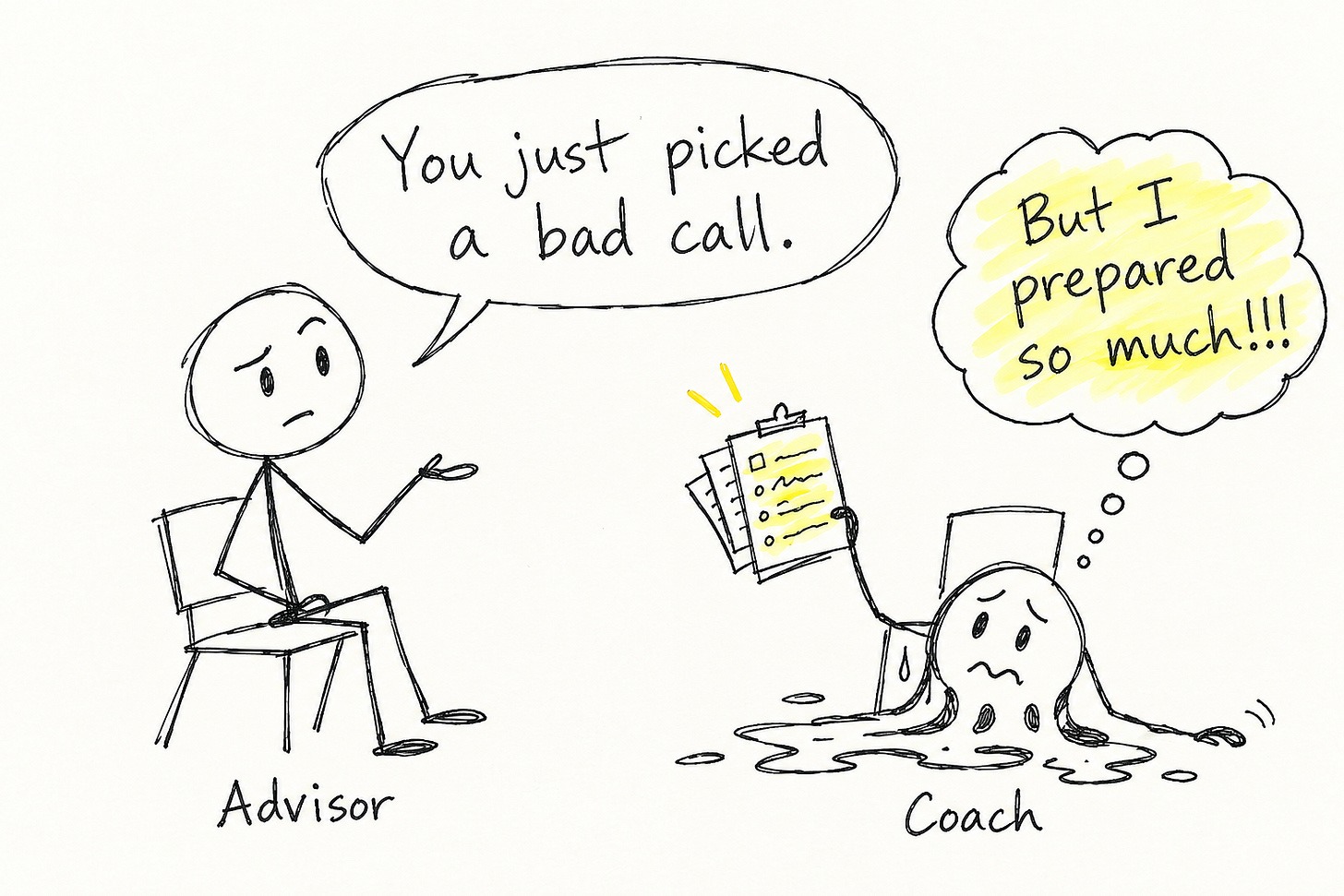
Well, shoot. You came in excited to help them improve. Now the conversation is about what made that particular call an outlier.
Your instinct might be to bring more examples next time. Surely if you can show them the same pattern happening across five calls, they’ll accept that they have a problem worth fixing.
I’ve spent a decade working with people who coach phone teams, and this is often a problem with the prep. We’ve chosen a behavior that’s too broad, or a call with too much else going on to make the lesson clear. More examples won’t help much until we fix that.
One call can be enough to change a behavior dramatically, so long as you’re specific about three things.
Here’s real data from a client of ours, whose advisor changed one specific behavior rapidly after a really effective coaching session. I’ll show you how they did it.
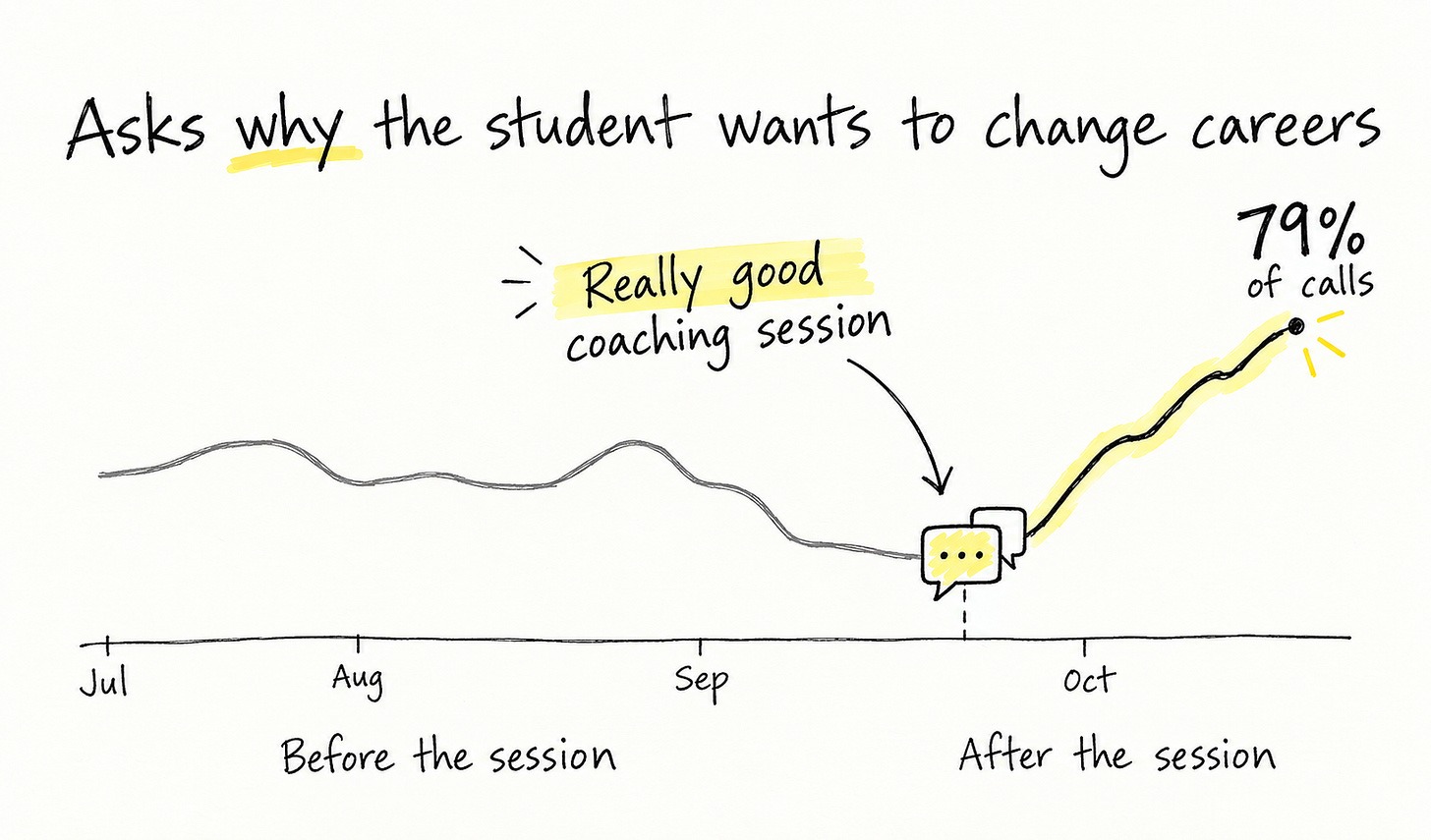
Preparing for the session
First, you need to choose ONE behavior. “Do better discovery” is much too broad. It covers a whole section of the call and could mean any number of things, including things the advisor thinks they’re already doing.
As you review their calls, you’re looking for a recurring pattern with THREE ingredients:
- Situation: The exact scenario in which the behavior occurs.
- Behavior: What the advisor says or does.
- Consequence: The problem this creates later in the conversation.
Pulling from our client example, it might sound like this:
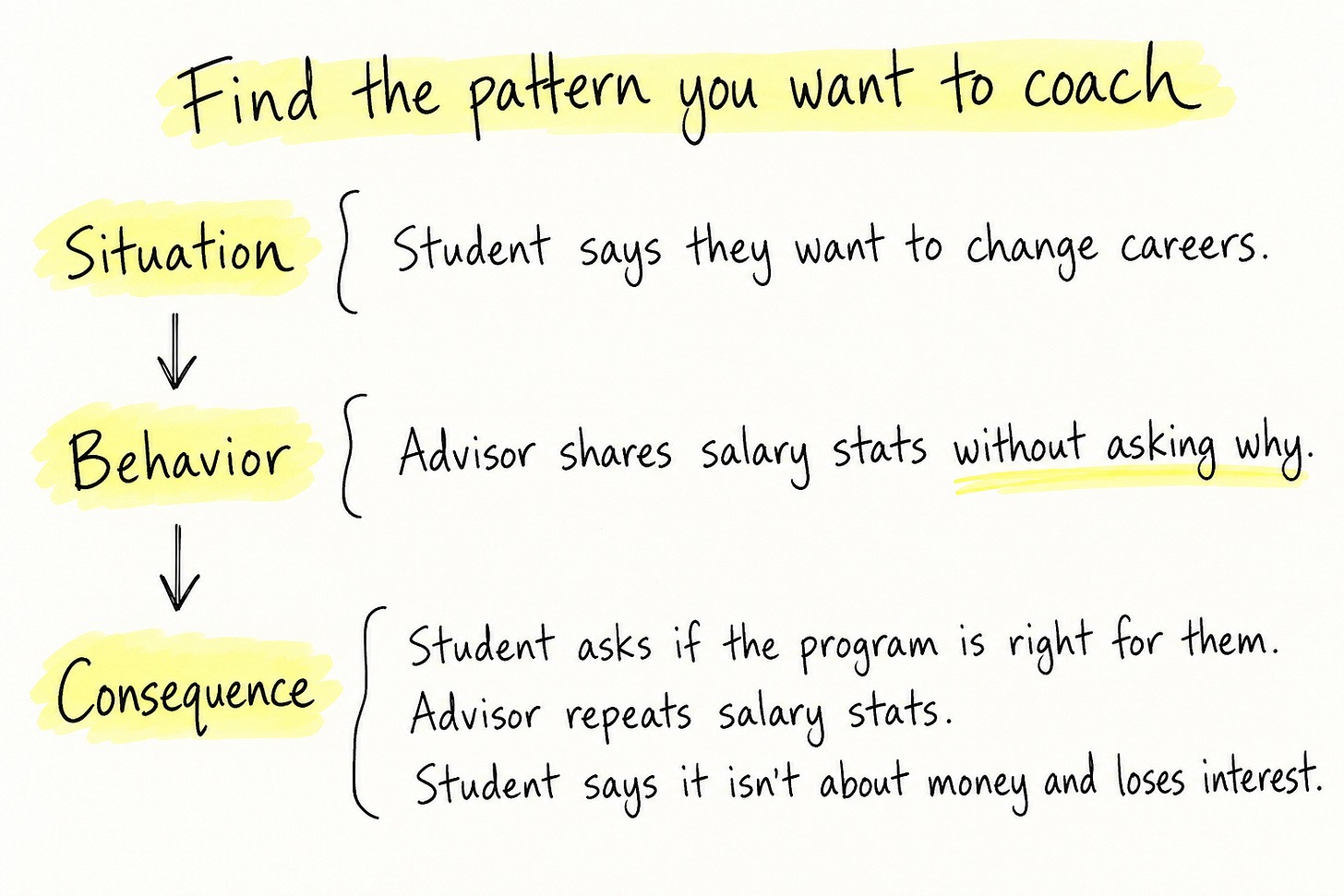
It’s tempting to make the consequence “and the student didn’t enroll.” I would avoid this entirely, because the advisor may rightly point to six other reasons they didn’t enroll.
The consequence should be something you can both hear: the student asks whether the program fits, gets an answer about salary, and loses interest. You don’t have to prove why they ultimately did or didn’t enroll.
Then choose one call
Once you’ve identified the pattern you want to coach, choose ONE call to play in the session. You may have reviewed plenty of calls to get here; now you’re choosing the clearest example to teach from.
Be picky. The call needs to contain the exact situation, behavior, and consequence you’re going to describe. If the student explained their reasons earlier, or the advisor tried asking and got nowhere, you can’t use that call to make this point.
A useful test is “could something else on this call explain what happened?” If so, pick a different call.
This is the hardest part of the prep. If you skip it, you risk spending the session talking about what made that particular call unusual.
Step 1: Explain the problem before playing the recording
Start with what you’ve noticed using the situation -> behavior -> consequence sequence:
“When a student mentions wanting a career change, you go straight into salary statistics before asking why. Later, when they question whether the program is right for them, you repeat those statistics. They say it isn’t about the money and that the program doesn’t sound like what they want. We haven’t learned enough about what they want to give them a useful answer.”
Then ask:
“Have you noticed this too? Why do you think it happens?”
Hear them out. They probably have a reason for doing what they do, and you do need to understand it.
Suppose they say students like hearing those salary statistics. You might agree. The question is whether salary information is enough to answer what this particular student is concerned about.
For example, a student might want to change careers because they’re tired of working nights. They want to be home when their kids get back from school. A couple of questions could tell you that. Now you can discuss whether the career they’re considering offers that schedule, and whether the school’s schedule works for them too.
The advisor may agree with the reasoning and still believe it doesn’t apply to them very often. That’s okay. They understand why asking would help. Now you can show them where they could have used it.
Step 2: Play the situation and behavior, then the consequence
Don’t play the entire call. First, play the situation (student mentioning a career change) and the behavior (advisor moving into salary information). Then pause.
Ask whether they hear what you described. If you’ve chosen the call well, agreeing on the facts of what happened should be straightforward.
Then jump to the consequence, where the student questions whether the program is right for them. Play the advisor repeating the salary statistics and the student explaining that money isn’t what matters and the program doesn’t sound like what they want.
Ask what they notice.
If you followed these steps exactly, it is very unlikely you’ll hear “you picked a bad call.”
Step 3: Give them the words
The change itself should be very small. Give them an actual sentence to try:
“What’s making you want to leave your current career?”
If they prefer different wording, that’s fine. The point is that they leave knowing what to ask when they hear someone say they want a career change.
By this point, you’ve done most of the work. They understand why their current approach loses the student’s interest, and they have a specific question that would help them give a more relevant answer.
You can also roleplay the call you just discussed. Run it a few times so the words feel comfortable, then have them write down the question they want to try. Because you’ve coached something so specific, it’s easy to verify whether it changed in a couple days: when a student mentions changing careers, does the advisor ask why and use the answer later?
Summary
In a funny sense, “you picked a bad call” may be right. You identified a behavior, but the call example didn’t make it clear why it mattered or what would have worked better.
That’s what I would fix before bringing five more recordings into the next 1-1.
Help your advisors improve faster
See how Voiceops fits your admissions and enrollment team.